
Your Heart Doesn't Love Energy Drinks — Here's Why
August 7th, 2026
When people think about protecting their heart, food usually gets all the attention. But what you drink matters just as much — and one popular category of beverage has cardiologists especially concerned.
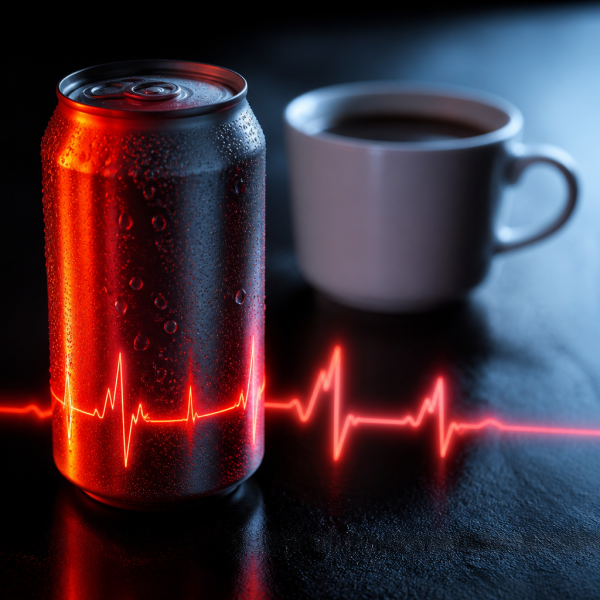
The Drink Cardiologists Want You to SkipDr. James Stone, a cardiologist at South Heart Clinic in Harlingen, Texas, has a clear message for his patients: steer clear of energy drinks."If you're a heart patient, you need to avoid these at all costs," he says. "But honestly, I tell everyone: just try to avoid them."A standard 8.4-ounce energy drink packs about 80 milligrams of caffeine — not an outrageous amount on its own. In fact, Dr. Stone isn't against caffeine itself. He considers it perfectly fine within the recommended daily limit of 400 milligrams, and he'd much rather see people reach for black coffee than an energy drink.
So What's the Real Problem?It's not the caffeine — it's everything else riding along with it. Energy drinks typically combine caffeine with added sugars and other stimulants like taurine, guarana, and L-carnitine. Taken individually, these ingredients might be manageable. Stacked together in a single can, they can overwhelm the nervous system."We're mixing in multiple stimulants, and we're stacking them all into one drink at one time," Dr. Stone explains. "That leads to potential heart rhythm issues, which can be dangerous or catastrophic. If you're a heart patient, that can tip you over in a bad way."This isn't just theoretical. Researchers have found that in people with underlying genetic heart conditions, energy drinks can trigger life-threatening arrhythmias. One cardiologist who co-authored related research described the effect as capable of catching a vulnerable heart "off guard," potentially leading to sudden cardiac arrest.For patients managing heart failure or coronary artery disease, the risk is even more direct. Many take medications like beta blockers specifically to slow their heart rate — and energy drinks work against that treatment entirely.Even for healthy people, the effects can be unpleasant: jitteriness, a racing pulse, or heart palpitations. Dr. Stone sees this often in young people, athletes, and night-shift workers who lean on energy drinks to power through long hours. He's had patients casually describe drinking three, four, even five a day between studying sessions — a habit that concerns him enough to speak up every time. Given those numbers, it's no surprise the American Academy of Pediatrics recommends adolescents avoid energy drinks altogether.
A Simple SwapDr. Stone's advice is refreshingly simple: if you're a heart patient, skip energy drinks entirely. And even if you're not, he'd still encourage moderation — mainly because energy drinks have a way of becoming a habit."It's sweet, it tastes good. They're borderline almost addicting, and they keep you up, and they give you a rush," he says. "It's this unnecessary evil we don't need to get ourselves into."His go-to alternative? Black coffee. According to the American Heart Association, up to five cups a day — right around that 400-milligram caffeine threshold — is safe for most adults and may even come with cardiovascular benefits.The takeaway: it's not caffeine itself you need to worry about. It's what else is riding along with it.
Want more health and wellness content?
WellnessConnect publishes evidence-based articles every week, along with personalised programs for employers and their teams.
Browse all articles Get started with WellnessConnect