
What's Actually in Your Food? Common Preservatives May Be Quietly Affecting Your Heart
May 24th, 2026
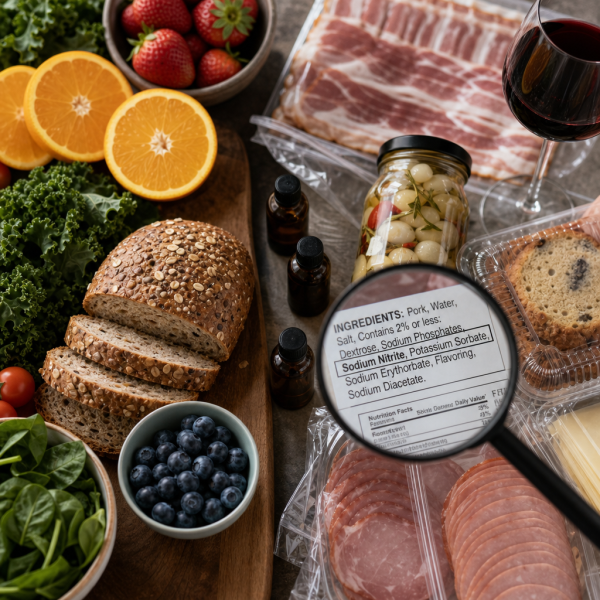
We all love food that stays fresh longer, but a sweeping new study out of France suggests the preservatives making that possible could come with a hidden cost to your heart health.Researchers tracking more than 112,000 people found that common food preservatives were linked to a 29% greater risk of high blood pressure and a 16% higher risk of heart attacks and stroke. Perhaps most surprising? Even preservatives marketed as "natural" — like citric acid and vitamin C (ascorbic acid) — were associated with a 22% greater risk of high blood pressure among people who consumed them most.Wait, vitamin C is a problem?Not exactly — and this is an important distinction. Vitamin C found naturally in oranges or strawberries is different from the chemically manufactured ascorbic acid added to packaged foods. As the study's senior author Mathilde Touvier explained, the two may affect the body in meaningfully different ways. So this isn't a reason to ditch your fruit salad.It's not just ultra-processed foodsHere's something that might catch you off guard: preservatives don't just hide in obvious junk food. Previous research by the same team found that only 35% of preservative-containing foods people eat actually come from ultra-processed sources. That means plenty of seemingly ordinary foods — think wines, cheeses, deli meats, baked goods, and juices — are part of the picture too.The study, published in the European Heart Journal, zeroed in on 58 preservatives and found eight specifically tied to elevated blood pressure. Among them were potassium sorbate (found in wine and baked goods), sodium nitrite (a staple in bacon and deli meats), and several antioxidant preservatives used to keep foods from browning.So what can you do?The researchers aren't suggesting you overhaul your entire diet overnight, but they do offer some practical guidance: lean toward fresh, minimally processed foods when you can. If convenience is a priority, frozen foods are often preserved through cold temperatures rather than chemical additives — a small but meaningful swap.It's also worth noting that preservatives serve a genuinely useful purpose. As food science professor Gunter Kuhnle pointed out, they help prevent foodborne illness, cut down on food waste, and keep our food supply safe. The goal isn't to vilify them, but to better understand their long-term effects.The bottom lineThis study is observational, meaning it shows associations rather than direct cause and effect. But with over 112,000 participants tracked over years — and similar findings now emerging around cancer and type 2 diabetes risks — scientists say the signals are strong enough to keep investigating. In the meantime, reading ingredient labels and choosing whole foods more often is never a bad idea.
Want more health and wellness content?
WellnessConnect publishes evidence-based articles every week, along with personalised programs for employers and their teams.
Browse all articles Get started with WellnessConnect